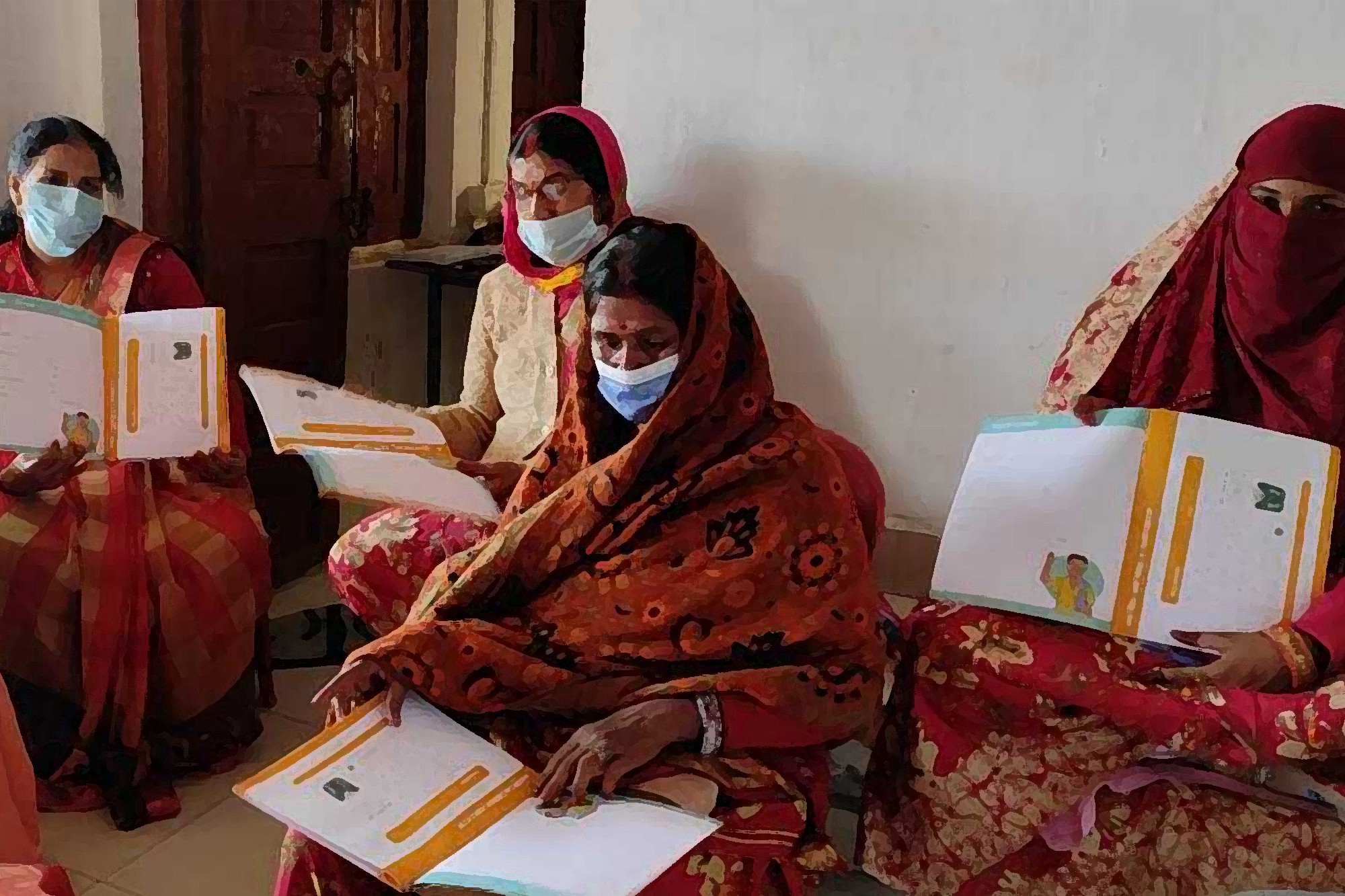
TB recovery tracker: Small book. Big stakes.
Year
2023
Services
Print Design
Prototype
Design Research
Credits

The Problem
TB treatment requires six months of consistent daily medication. Yet patients with low health literacy are almost twice as likely to fail to complete their treatment PubMed Central — and in low-resource districts like Guna and Khandwa in Madhya Pradesh, patients had no personal tool to track their own progress. Stigma left families isolated, and exhaustion caused many to give up before finishing.
"These weren't gaps in medicine. They were gaps in dignity and support."
My Role
I led the end-to-end design process — from ideation and early concept exploration, field research with patients, ASHAs, and Community Health Workers across 70 Health and Wellness Centres in Guna and Khandwa, through prototype development, testing, and final refinement.
What We Designed
Patients didn't want anything that looked medical or stigmatising — so the cover carried no TB branding, and the name was changed from "tracker" to "रजिस्टर" (register) based directly on patient feedback. Inside: day-by-day progress tracking replaced abstract treatment charts, and a monthly weight-check encouraged regular clinic visits. Designed for both daily home use and ASHA-facilitated conversations.
Process
In-depth field interviews with patients and ASHAs across Guna and Khandwa. Multiple formats explored before the booklet emerged as the most practical. Anonymous co-creation voting kept decisions cross-functional. Each prototype tested under real home-visit conditions.
Outcome
9 out of 10 booklets showed no damage after a full 6-month treatment cycle. ASHAs began attaching the tracker unprompted as proof in official government reports. The District TB Officer in Guna formally endorsed it.
The tracker's logic was later digitised into a WhatsApp-based RES, now live across Punjab, Karnataka, and Chandigarh with over 3,000 enrolled patients.
"What started as a personal booklet became infrastructure."