July 2024
"Sometimes it's okay to yell at them"
A needs-finding session in Janakpur. A husband's words. And what it told us about where the work really begins.
A needs-finding session in Janakpur. A husband's words. And what it told us about where the work really begins.


He said it casually. Like it was obvious.
"Sometimes it's okay to yell at them."
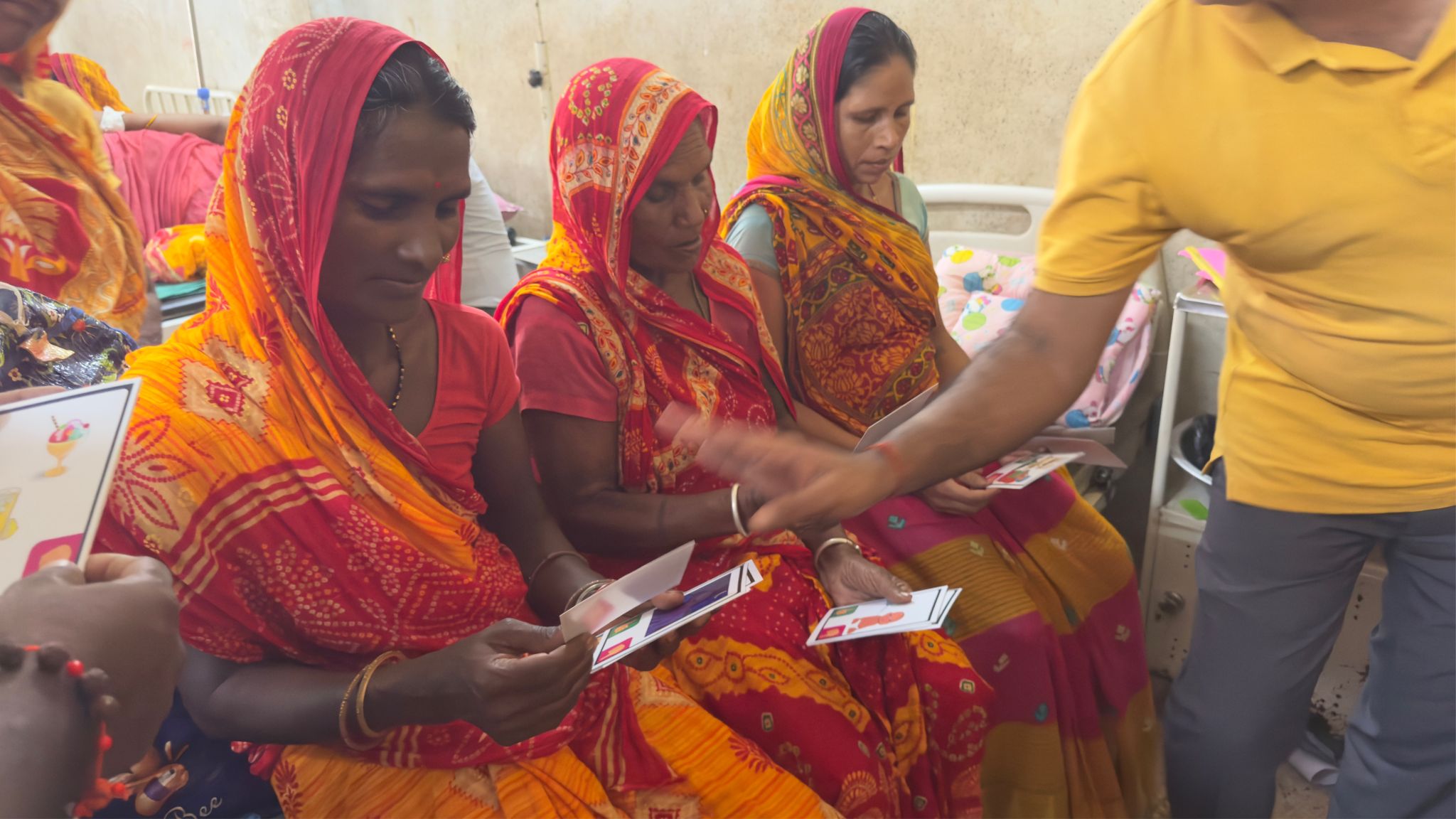
A husband. Sitting beside his pregnant wife. Three relatives crammed onto the same bed in the PNC ward at Janakpur District Hospital, Nepal.
The words just hung there.
This was during our needs-finding work with Noora Health and One Heart Worldwide. We were running a simple card activity, good behaviours and bad behaviours, asking families to sort and respond. The kind of activity that feels light but opens up things people rarely say out loud.
And they did. Again and again, across different families, different wards.
Beliefs about how pregnant women should be treated. Who makes decisions. What counts as care. What gets normalised inside a household because it has always been that way.
The cards didn't create these conversations. They just gave people a structure to have them.
What I took from this:
Needs-finding isn't just about collecting information. Sometimes it's about creating the conditions where something true can surface. That husband wasn't trying to shock anyone. He was just answering the question.
That's the data. And it's the starting point for everything that comes after.
He said it casually. Like it was obvious.
"Sometimes it's okay to yell at them."
A husband. Sitting beside his pregnant wife. Three relatives crammed onto the same bed in the PNC ward at Janakpur District Hospital, Nepal.
The words just hung there.
This was during our needs-finding work with Noora Health and One Heart Worldwide. We were running a simple card activity, good behaviours and bad behaviours, asking families to sort and respond. The kind of activity that feels light but opens up things people rarely say out loud.
And they did. Again and again, across different families, different wards.
Beliefs about how pregnant women should be treated. Who makes decisions. What counts as care. What gets normalised inside a household because it has always been that way.
The cards didn't create these conversations. They just gave people a structure to have them.
What I took from this:
Needs-finding isn't just about collecting information. Sometimes it's about creating the conditions where something true can surface. That husband wasn't trying to shock anyone. He was just answering the question.
That's the data. And it's the starting point for everything that comes after.