Thali Model: Nutrition made visible

The Problem
Hospital nutrition guidance in Nepal came as food pyramids and dense charts, pointing to foods that were exotic, unaffordable, or simply not part of how families here eat. For pregnant mothers and caregivers with low literacy, these materials weren't just unhelpful. They were invisible.
The information existed. It just didn't look like anything they recognised.
My Role
I led the end-to-end design process, from formative research with mothers, caregivers, nurses, and local shopkeepers across Kathmandu, Janakpur, and Surkhet, through design research, ideation, prototyping, field testing, and final production.
What We Designed
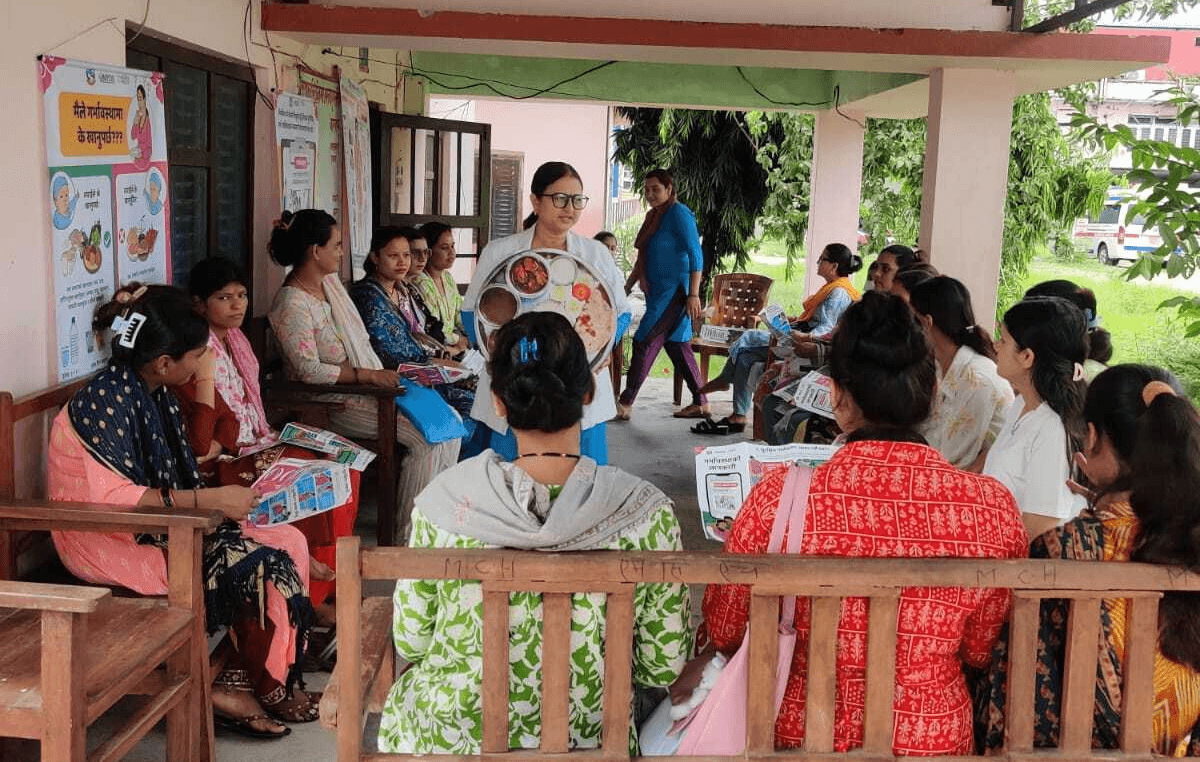
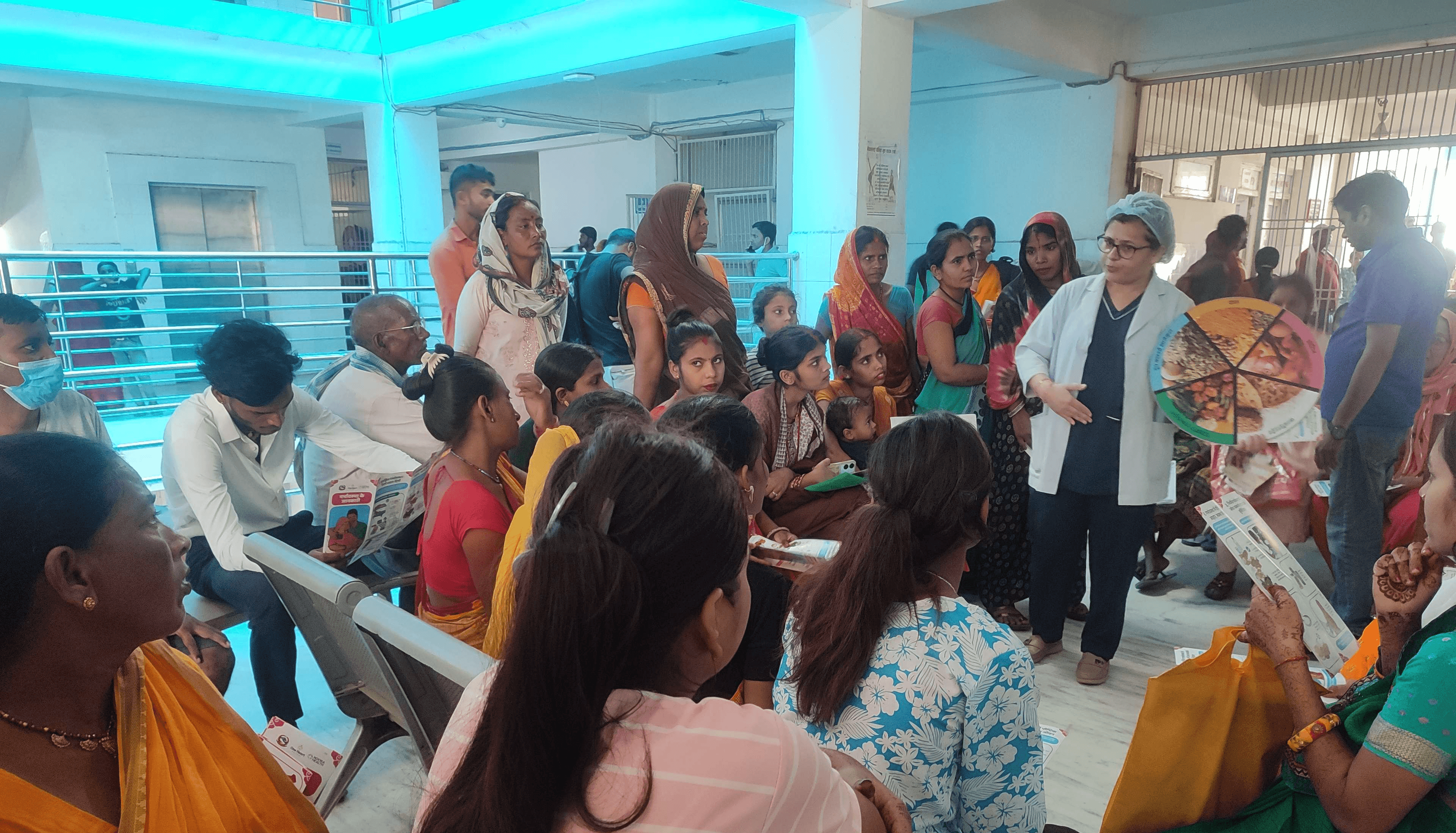
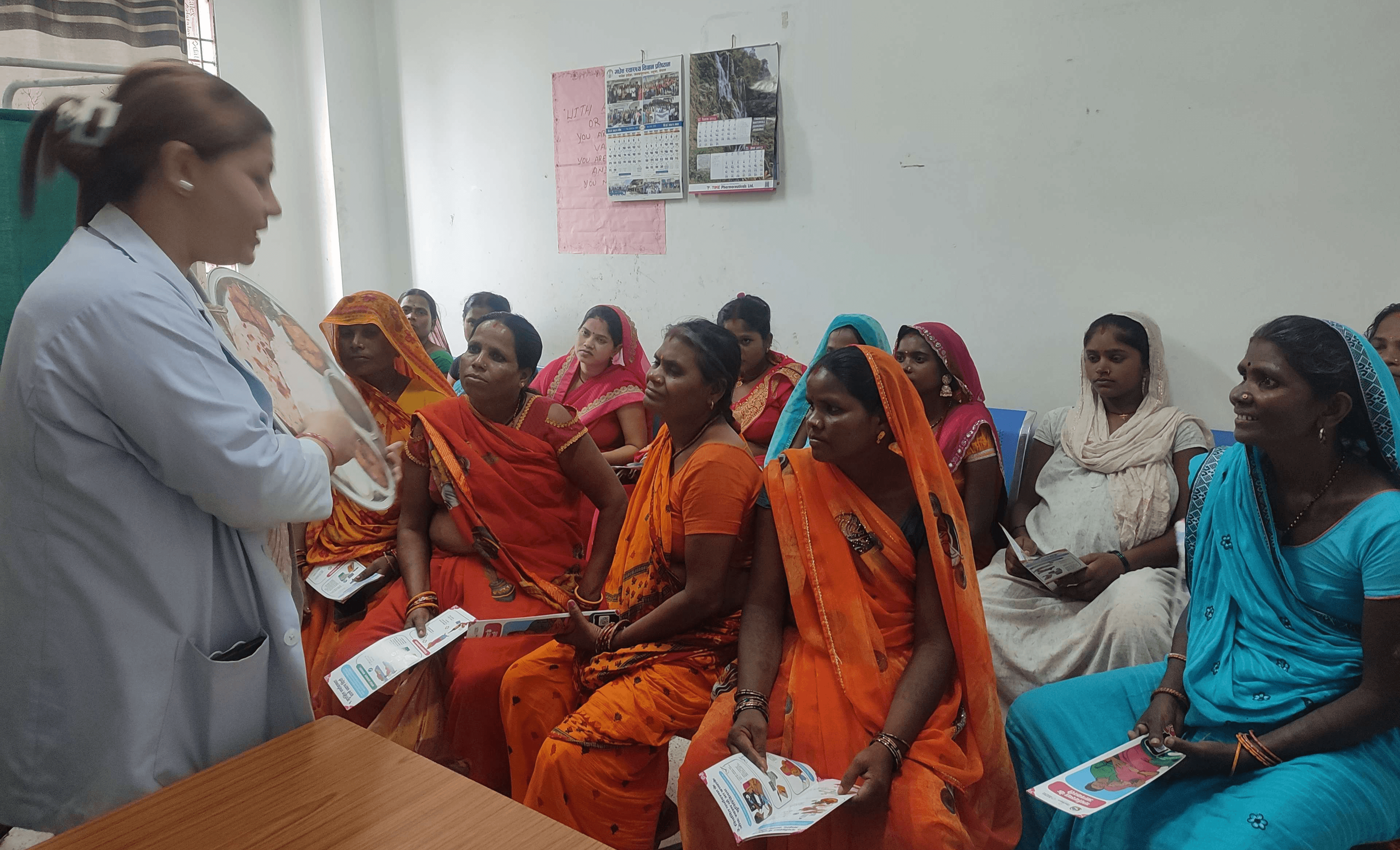
The idea started with a thali, a plate every family in Nepal already eats from. Instead of a pyramid, we designed an 18x18 inch sunboard print showing a real, home-cooked Nepali meal: roti, rice, lentils, saag, eggs, vegetables. Food groups were shown using katoris (household bowls) as portion measures, two katori of vegetables, one of rice, because not everyone understands numbers or abstract measurements.
The back of the board added guidance on foods that support breast milk production, turning it into a two-sided conversation piece between nurses and families.
We started with hand-drawn illustrations. Testing showed people couldn't distinguish grains from pulses from leafy greens, the colours and shapes were too similar. So we shifted to a photograph of a real home-cooked meal. Recognition was immediate
Process
Field conversations across Surkhet, Janakpur, and Kathmandu uncovered what families actually eat, what they can afford, and how they think about food during pregnancy. One mother said: "
"What I eat, my baby eats, so I skip spicy food."
"We buy whatever's available at the nearest shop, mostly seasonal, affordable fruits, vegetables, and grains."
These weren't just insights. They became design constraints.
Several formats were explored, foldable sheets, spiral-bound cards, hand fan shapes. The final choice was a 5mm lightweight sunboard print: large enough for group visibility in busy hospital wards, light enough for nurses to carry, sturdy enough to last without frequent reprints.
An A/B test was run in Kathmandu, Surkhet, and Janakpur. Nurses used both the standard government nutrition poster and the Thali Model in mock sessions, then chose. Healthcare workers chose the Thali Model every time.
"This is nothing like what the government gives us."
"Every time we take out the thali, there's so much curiosity and excitement in the air."Surkhet
"Both mothers and families can't wait to grab one of these. Everyone wants to take it home after the session."
Outcome
The Thali Model was integrated into the Nepal Care Companion Program (CCP) in February 2025 and is now in use across hospitals in Kathmandu, Janakpur, Surkhet, and Sudurpashchim.
Used in 93.4% of all CCP sessions during pregnancy and postpartum
Actively used by frontline health workers in 65 out of 66 observed sessions
Officially approved by Nepal's NHEICC for national public health programs
"Before, we used to just mention a bunch of food names… now it shows local food combinations we actually eat, roti, rice, lentils, greens, eggs, fruits."
"Just saying things wasn't always enough, but now, showing the images really helps people remember better."
Recognition
The Thali Model was recognised by two international design awards in 2025.
It won at the Anthem Awards, brought to you by The Webby Awards, in the Health category for Campaign and Non-Profit work, under the entry "Nutrition made visible: Co-designing the Thali Model in Nepal."
It also won the Baby Blue Elephant at the Kyoorius Design Awards 2025, one of India's most respected design honours.